
When I joined The Side-Out Foundation as Director of Research Programs earlier this year, I knew I was stepping into something different. This wasn't just another clinical research position, it was an opportunity to fundamentally change how metastatic breast cancer patients access precision medicine.
The Side-Out Foundation has been conducting groundbreaking research in partnership with George Mason University for years, using multi-omic tumor analysis to help guide treatment decisions for metastatic breast cancer patients. This work has been invaluable, providing insights into tumor biology that go far beyond standard genetic testing. But as the precision medicine program evolved, it became clear that we needed to take the next step: bringing patient recruitment directly in-house. We wanted to ensure that when we connect with patients, caregivers, and oncology providers, they hear directly from us about why we're doing this research and how it will change the landscape of metastatic breast cancer treatment. Having control over our messaging, rather than relying on a third party to explain the Foundation's intent and mission, allows us to communicate our unique approach more effectively and authentically.
Why This Matters
Patient recruitment is the lifeblood of any research program, but in the metastatic breast cancer space, it's particularly challenging. The statistics tell a sobering story: fewer than 5% of cancer patients participate in clinical trials, and up to 20% of trials fail entirely due to insufficient enrollment. For patients with metastatic breast cancer, the barriers are even more pronounced.
Many patients simply don't know that opportunities like our precision medicine program exist. Even when they do hear about clinical trials or research registries, the information often comes too late in their treatment journey. Geographic distance to major research centers, financial concerns about travel and time away from work, and the complexity of navigating eligibility requirements all create additional obstacles. For some patients, strict eligibility criteria in traditional trials exclude them before they even have a chance to participate, even though they could potentially benefit from the research.
Perhaps most importantly, there's often a gap between when a patient would benefit most from precision medicine insights and when they actually learn about these options. Traditional academic research timelines don't always align with the urgency that metastatic breast cancer patients face.

You are reading about the treatment maze metastatic patients face daily. Here's the reality: less than 7% of breast cancer research funding goes toward metastatic disease—the form that actually takes lives. Your donation to the Side-Out Foundation Research Program funds the breakthroughs that could transform "incurable but treatable" into real hope for 164,000+ people. Click here to donate because tomorrow's breakthrough starts with today's research.
Building Direct Connections
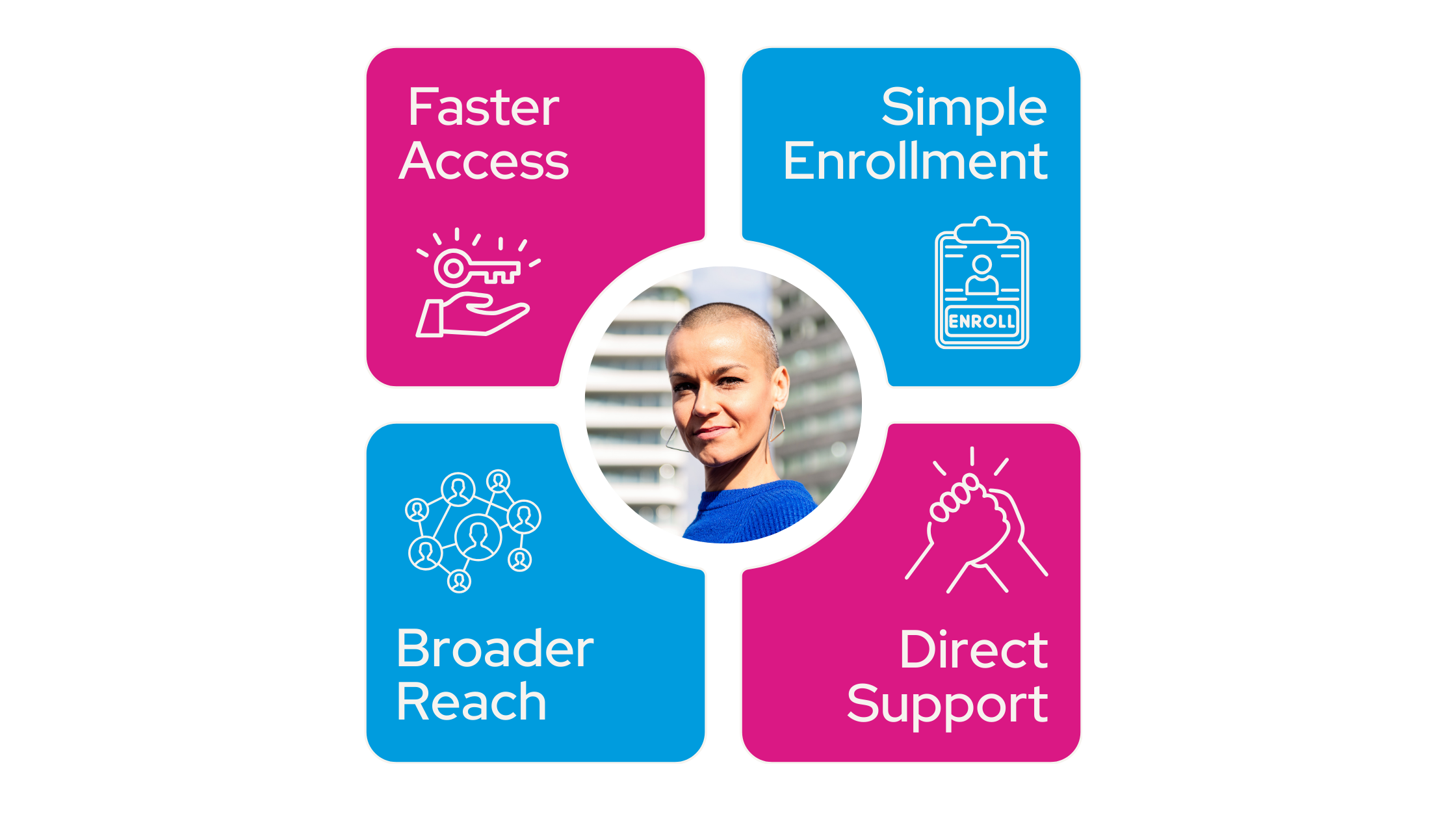
By bringing patient recruitment in-house in a decentralized model, we're removing many of these barriers. Instead of relying solely on academic research pathways, we can now connect directly with patients, their caregivers, and their oncology teams. This means:
- Faster access: Patients can learn about our precision medicine program earlier in their treatment journey, when the information can have the greatest impact
- Simplified enrollment: We've streamlined the enrollment process, making it easier for patients to participate regardless of where they receive their cancer care
- Direct support: Our team can work directly with patients and their physicians, answering questions and providing support throughout the process
- Broader reach: We're not limited to patients at specific academic medical centers—we can serve patients across the country
What This Means for Our Program
My role involves building the infrastructure to make this possible. That includes developing our Protocol SOF004, a comprehensive registry study that aims to enroll at least 1,000 patients annually. We're establishing electronic consent systems, creating patient-friendly educational materials, and building relationships with oncology practices across the country. It's complex work that touches on regulatory compliance, data management, patient communication, and clinical operations—all the pieces that need to work together seamlessly to serve patients well.
This is where my background in both academic and biotech research has been invaluable. I understand the rigorous standards required for credible research, but I also bring an urgency to remove unnecessary barriers that don't serve patients or science. Every day, I'm working to ensure that our research program is both scientifically robust and genuinely accessible to the patients who need it most.
Looking Forward
As we continue to build our patient recruitment capabilities, I'm excited about what's ahead. We're establishing partnerships for our electronic systems, preparing for networking and potential partnerships with folks at conferences like the San Antonio Breast Cancer Symposium, and constantly refining our processes to better serve patients.
But beyond the logistics and systems, what motivates me every day is knowing that each patient we successfully connect with our program gets access to insights that could change their treatment trajectory. That's the real measure of success, not just the number of patients enrolled, but the impact we're making in their lives.
If you're a metastatic breast cancer patient, caregiver, or oncology provider interested in learning more about our precision medicine program, we want to hear from you. This is what bringing patient recruitment in-house makes possible: direct connections, immediate support, and personalized care that doesn't wait.