Understanding how we’re working to make MBC a disease people can live with.
At the Side-Out Foundation, we're committed to funding research that makes a real difference for people living with metastatic breast cancer. Today, we want to share an exciting development in our current research, explained in a way that doesn't require a medical degree to understand.
The Challenge We're Tackling
Metastatic breast cancer remains one of the most difficult diseases to treat. The most common type is called ER+/HER2- breast cancer, and doctors have made tremendous progress treating it with a combination of therapies that work together to slow cancer growth.
Here's the problem: these treatments work well at first for many patients, but over time, the cancer can become resistant. Cancer finds a way around the treatment. Some patients' cancers are resistant from the start, while others respond beautifully initially but then the cancer adapts and starts growing again.
Why this matters: Once resistance develops, the next treatments available often don't work as long or as well. This is why understanding how and why resistance happens is so critical to helping patients live longer, better lives.
Our Breakthrough Discovery
Thanks to a clinical trial funded by the Side-Out Foundation, our research team made an important discovery. We found that patients whose cancers stopped responding to treatment all had something in common: high levels of a protein called EZH2.

What is EZH2?
Think of it this way:
Imagine your body's cells are like offices with different departments. EZH2 is like an employee who's supposed to work in the main office (the nucleus) doing one job. Scientists have known about EZH2 for years and even developed drugs to stop its work in that main office.
But here's what we discovered: in treatment-resistant breast cancers, EZH2 leaves the main office and goes to a different part of the cell (the cytoplasm). There, it does something completely different, it handcuffs another protein called Rb, which normally acts as a brake to stop cancer cells from growing out of control.
This discovery explains why existing drugs targeting EZH2 haven't worked in breast cancer, they were only stopping EZH2's work in the main office, but the real problem was happening somewhere else entirely.

You are reading about the treatment maze metastatic patients face daily. Here's the reality: less than 7% of breast cancer research funding goes toward metastatic disease—the form that actually takes lives. Your donation to the Side-Out Foundation Research Program funds the breakthroughs that could transform "incurable but treatable" into real hope for 164,000+ people. Click here to donate because tomorrow's breakthrough starts with today's research.
Testing Our Theory
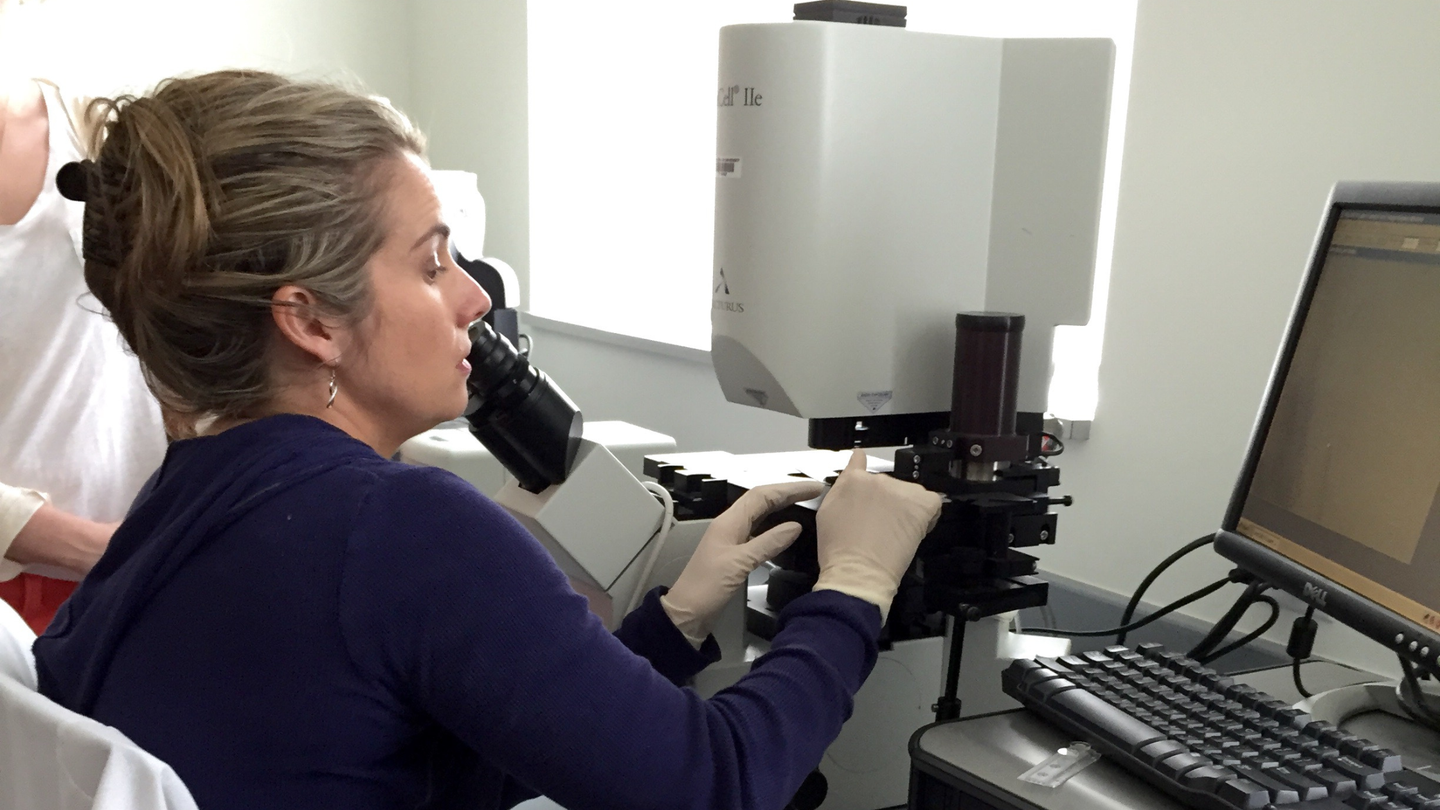
In our laboratory studies, we tried something different. Instead of just blocking what EZH2 does in the nucleus, we eliminated it completely. The results were promising: when we removed EZH2, the Rb protein was freed to do its job again, and the resistant cancer cells stopped growing while healthy cells were left unharmed.
The bottom line: We've identified a new way that cancer becomes resistant to treatment, and more importantly, we've found a potential new approach to overcome that resistance.
What This Means for Patients
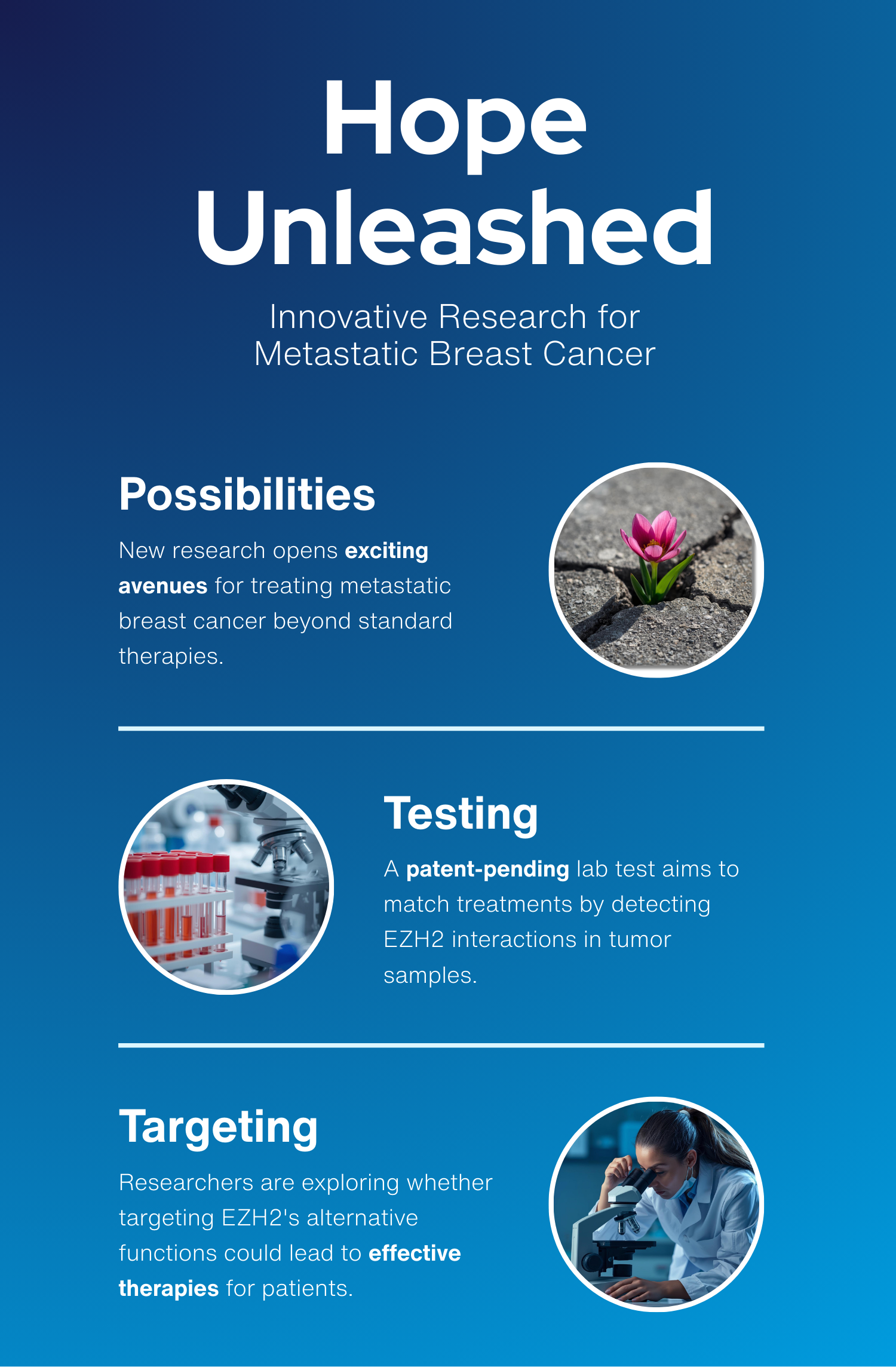
This research opens up new possibilities for treating metastatic breast cancer when it stops responding to standard therapies. Here's what we're working on now:
Developing a Test (Patent Pending)
We're creating a laboratory test that can detect EZH2 and its interaction with Rb in tumor samples. In the future, doctors could use this test to identify which patients' cancers are using this resistance mechanism. This means treatments could be more precisely matched to each patient's specific tumor biology; the essence of precision medicine.
Exploring Treatment Options
We're testing whether targeting EZH2's alternative function could be an effective treatment approach. The good news is that new drugs designed to block EZH2 in this different way are already in early clinical development, which means there's a clear path to getting these discoveries to patients who need them.
Hope on the Horizon
While this research is still in progress, it represents exactly the kind of work the Side-Out Foundation was created to support: innovative science that could change how we treat metastatic breast cancer and help make it a disease people can live with.
The Road Ahead
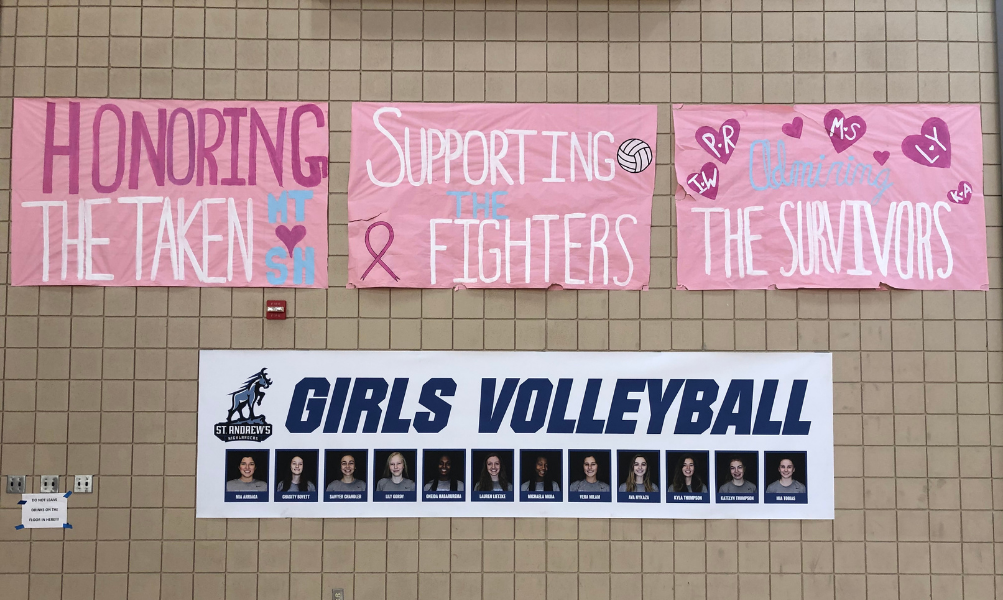
Research like this doesn't happen overnight, and it doesn't happen without support from our volleyball communities and generous donors. Every dollar raised through Dig Pink, Perfect Pass, and our other programs helps fund this kind of groundbreaking work.
We're not just hoping for a cure, we're actively working toward making metastatic breast cancer a manageable disease. And discoveries like this one bring us closer to that goal.
Thank you to everyone who has supported the Side-Out Foundation. Your fundraising, your awareness efforts, and your dedication to our mission are directly contributing to research that will save lives.